Current Issue
Author(s)
Dr. A. Puvi Lakshmi
No. 1, Kadambadi Amman Kovil 2nd Street, Kadambadi Amman Nagar, Valasaravakkam, Chennai – 600087, India.
ISBN 978-93-48006-05-9 (Print)
ISBN 978-93-48006-07-3 (eBook)
DOI: https://doi.org/10.9734/bpi/mono/978-93-48006-05-9
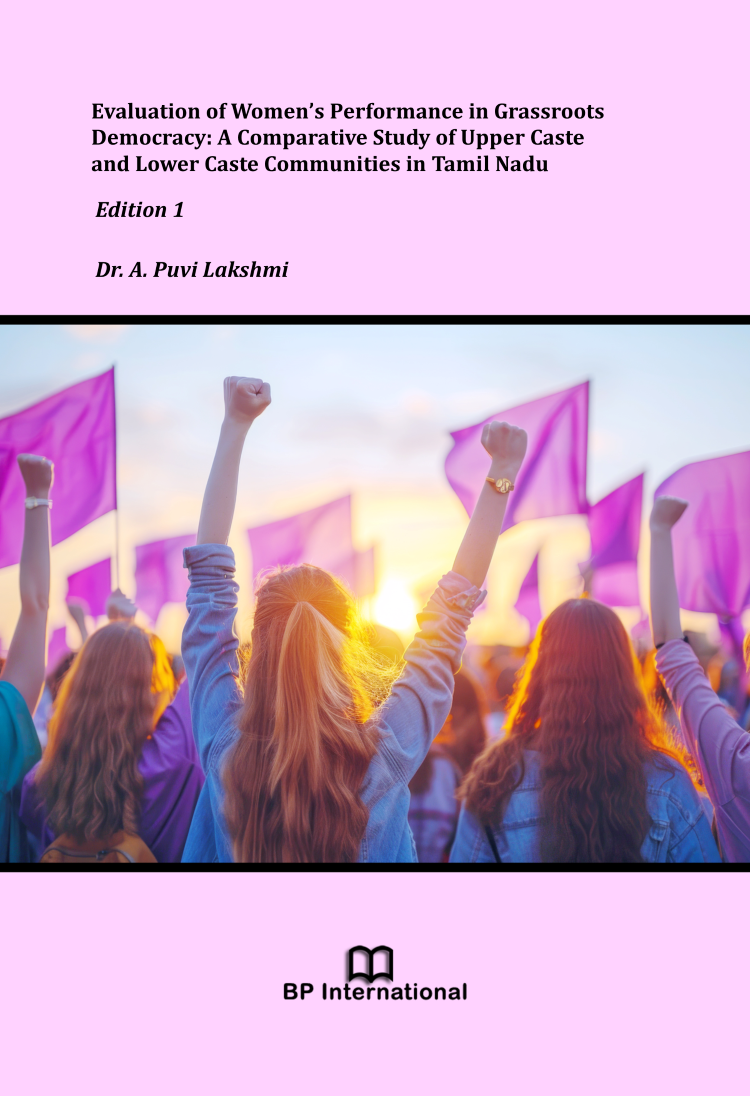
The status of women is consistently marginalized and vulnerable, spanning all sectors and aspects of life. They face significant challenges from male counterparts and other women alike. Even after India's 75th year of independence, rural Indian women remain disenfranchised and underdeveloped. While national freedom signifies the advent of a republic and true equality, political reservations based on constitutional provisions represent the purest form of ensuring women participate in the nation-building process. These reservations, crafted by constitutional framers and policymakers, empower women to advocate for their own empowerment. However, rural women continue to endure significant rigidity, arrogance, and conflict from various counterparts. Therefore, it is imperative to analyse and assess the contributions of rural women in rural development. This study focuses exclusively on the performance of women in rural panchayats, which are considered the cornerstone of grassroots democracy. It documents their contributions and the major challenges they face in participating in such activities. Additionally, it compares the experiences of two groups of women: upper-caste and lower-caste Dalit women, thereby highlighting the unique challenges faced by both communities and those who have successfully navigated and overcome these challenges. Conducted in Tamil Nadu, a developed state in South India, this research on the political empowerment of women is crucial, as the models observed here can potentially be applied to other developing regions and states. Furthermore, the research facilitated a comprehensive examination of the challenges encountered by rural women in local governance, encompassing multiple dimensions. It also incorporates potential suggestions and strategies to address the gaps and obstacles they face.
Services:
1. Professional review, editing and plagiarism checking.
2. Professional cover-page design and typesetting.
3. Specialized English editing and proofreading
4. Digital Object Identifier (DOI) allotment.
5. ISBN number (online and print version)
6. Online publication of the book and printing in the press.
7. Royalty: (80:20) profit sharing between author and publisher from the sale of books. Authors will get 80% of the profit and Publisher will get 20% of the profit.
8. Normally Books will be closed access to increase the possibility of sale and authors will retain the copyright of the book chapter/ books. Special requests of open access books can also be considered in case of complete book publication.
