In-vivo Photothermal and Photodynamic Therapy for Tumors Using a Theranostic Strategy Based on Graphene Oxide
DOI:
https://doi.org/10.9734/bpi/acpr/v7/7426BKeywords:
Graphene oxide, photodynamic therapy, photothermal therapy, cancer treatments, nanomedicine, nanocomposites based graphene oxide, nanoparticle-based drug delivery systems, theranosticAbstract
Cancer is the second leading cause of death globally and is responsible for about 1 in 6 deaths in the world. Therefore, there is a demand to introduce novel, effective antitumor agents delivered to their specific target tissue/site to improve the efficiency of cancer diagnosis and treatment and limit the undesired systemic adverse effects caused by conventional chemotherapeutic agents. In this context, graphene oxide (GO) has garnered interest in biomedicine for cancer therapy due to its distinct physical and chemical properties.
This study describes the in vivo application of Graphene Oxide (nc-GO) nanocomposites whose surfaces have been modified with PEG-folic acid, Rhodamine B, and Indocyanine Green. In addition to displaying red fluorescence spectra of Rhodamine B acting as the fluorescent marker, in vivo experiments were performed using nc-GO to apply Photodynamic Therapy and Photothermal Therapy in the treatment of Ehrlich tumors in mice using Near-Infrared Light (808 nm 1.8 W/cm2).
This study utilized fluorescence images to analyze the tumor, aiming to achieve the highest concentration of nc-GO over time (time after intraperitoneal injection). The resulting time data was then employed to optimize the tumor treatment through PDT / PTT. The current study shows an example of the successful use of nc-GO nanocomposites as a theranostic nanomedicine to perform simultaneously In vivo fluorescence diagnostics and combined PDT-PTT effects for cancer treatments.
GRAPHIC ABSTRACT
Fig. 1 shows a self-explanatory graphical summary of the present study.
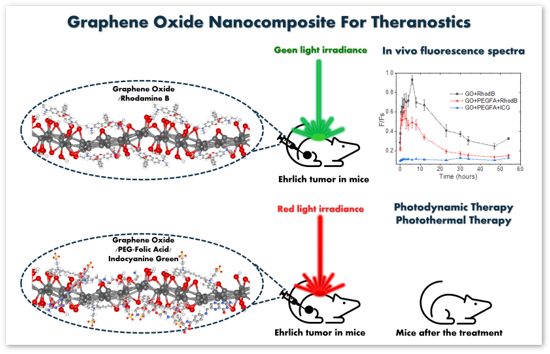
Fig. 1. In vivo fluorescence spectra and treatment of tumor based on GO- nanocomposites

