Cardiovascular Health and Non-Invasive Vascular Parameters in Proficient and Non-Proficient Individuals
DOI:
https://doi.org/10.9734/bpi/acmms/v9/3865Keywords:
Noninvasive techniques, cardiovascular parameters, large artery stiffness index, Reflection Index (RI), Left Ventricular Ejection Time (LEVT)Abstract
Yoga and relaxation have been successfully used to check high blood pressure and coronary artery disease. Yogic therapy not only reduces high blood pressure, but also reduces serum cholesterol, triglycerides, free fatty acids, blood glucose, and body weight. The yogic practice also improves physical fitness and helps to improve one’s efficiency.
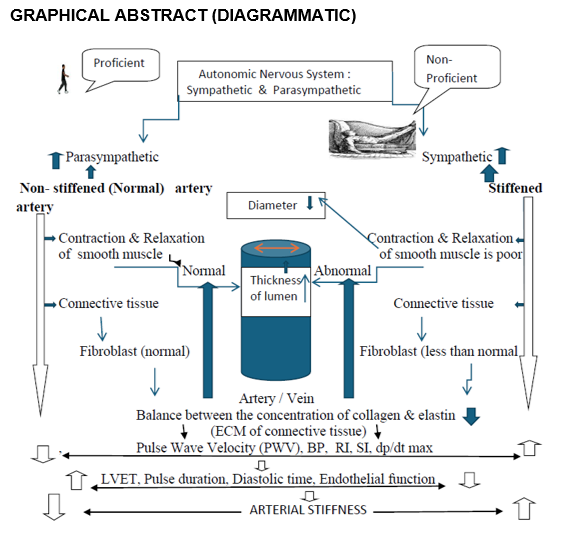
Cardiovascular disease (CVD) is associated with the development of atherosclerotic process that begins in the arteries, representing vascular pathology, can be measured in the form of reflection index (RI) representing stiffness of small and medium-sized arteries, stiffness index (SI) representing stiffness of large arteries and other noninvasive cardiovascular parameters, useful for evaluation of endothelial function, leads to cardiovascular morbidity and mortality. Previous reports have described a significant reduction of arterial stiffness and alteration in other related cardiovascular parameters in athletes as well as in proficient individuals and in yoga groups. No report so far is available on comparative analysis of noninvasive vascular parameters such as reflection index (vascular tone) termed as RI, Large artery stiffness index (SI), Dicrotic index (DI), Heart rate (HR), and cardiac parameters such as Left Ventricular ejection time (LEVT), Diastolic time, Ejection slope, dp/dt max in proficient and non-proficient healthy subjects. The present study has been undertaken to analyze the differences in non-invasive cardiovascular responses in both proficient and non-proficient healthy subjects. Various noninvasive cardiovascular parameters like RI, SI, DI, dp/dt max, LVET, pulse duration, diastolic time, ejection slope and systolic, diastolic, mean and pulse pressure were studied in both the groups by using PC-based PPG analysis system (Noninvasive assessment).
In the present study, no statistically significant differences were found in body weight and age, dp/dt max and ejection slope in two groups (proficient and non-proficient), but statistically significant differences were found in RI, SI, pulse duration, diastolic time, systolic (SBP), diastolic (DBP), Pulse (PP) and mean arterial blood pressure (MABP), signifying improved endothelial function and also would be attributed to increased parasympathetic tone in proficient as compared to non-proficient subjects irrespective of both age and sex. Significant reductions with SI & RI indicated increased arterial compliance in proficient individuals.